
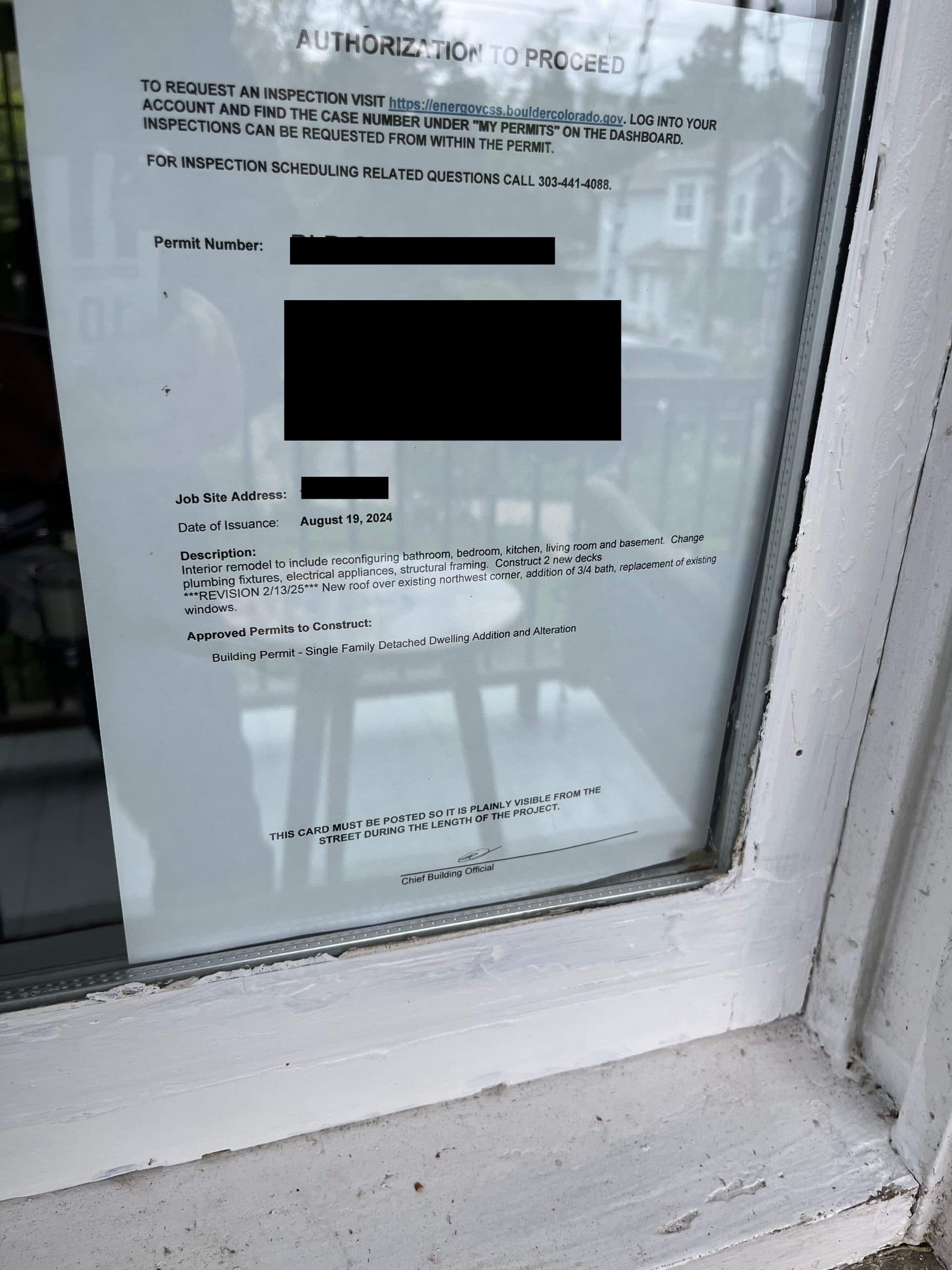
A Homeowner's Guide to Roofing and Siding Permits in Colorado
If you're planning a roof replacement or new siding in Colorado, permits are part of the process. And understanding how they work before your project starts will save you confusion, delays, and potential headaches at resale. This guide walks through how the permit process works for exterior projects in Colorado, what to expect at each stage, and why it matters - and how we handle all of it for you.
Colorado Has No Single Statewide Building Code
The first thing to understand is that Colorado doesn't operate under one uniform building code. Each city and county adopts its own version of the International Residential Code with local amendments. That means the rules for a project in Denver are not necessarily the same as in Fort Collins, Castle Rock, or unincorporated Douglas County.
Your jurisdiction - whether that's a city building department, a county office, or a regional authority - determines which code applies, what fees are charged, and how inspections are scheduled. If your home sits in an unincorporated area or a historic district, the process may be different than a standard residential project. Identifying which jurisdiction governs your address is the starting point for everything else, and it's the first thing we confirm on your behalf.
Does Your Project Require a Permit?
For roofing, the answer is almost always yes. A full roof replacement triggers a permit requirement in nearly every Colorado jurisdiction.
Siding is less consistent. Some jurisdictions require a permit for any full replacement; others exempt non-structural or minor work. The only reliable way to know is to check the local rule for your specific address. We verify this for your property before work begins, so nothing gets missed.
What the Permit Process Looks Like in Practice
Once we've confirmed a permit is required, here's the general sequence - all of it managed by us:
Application and fees. We file the application with the appropriate building department, along with any required plans or documentation. Permit fees for residential roofing and siding projects in Colorado typically run between $100 and $500 depending on the city and scope of work - and these fees are already included in your project scope. You won't be billed separately for them or asked to handle any of the paperwork.
The work is completed to current code. This is where jurisdiction-specific requirements come into play. In Colorado, that includes self-adhering ice-and-water shield at the eaves - a requirement that reflects the state's freeze-thaw conditions. For homes in mapped wildfire zones, there are also new Wildland-Urban Interface (WUI) requirements taking effect July 1, 2026, which can affect roofing materials, valley protection, and vent details. We build every project to the code that applies to your address.
Inspection. Every permit triggers at least one inspection. For a standard asphalt shingle roof replacement, that's typically a single final inspection after the work is complete. Tile and some other roofing systems require a mid-roof inspection in addition to the final. We coordinate the inspection schedule with the building department, and the inspector confirms the installation meets current building code - creating a documented record that the work was done correctly.
Permit closeout. Once the inspection passes, we finalize the permit. Most permits in Colorado remain valid for approximately 180 days, so we keep the project moving within that window and close it out properly on your behalf.
Why the Closed Permit is Important
A finalized permit is documentation that your project was inspected and met code at the time of installation. That record protects you in a few ways.
First, it gives you a clear line of accountability. If a question ever arises about how the work was done, there's an official record. Second, it matters at resale. Buyers and their agents routinely check permit history, and unpermitted work can complicate or delay a transaction. Because we pull the permit for your project and close it out properly, your home's records stay clean.
Who Handles the Permit on Your Behalf
We do - start to finish. That includes confirming the jurisdiction, verifying whether a permit is required, filing the application, paying the fees, and coordinating the inspection schedule. Permit costs are included in your project scope from the outset, so there are no surprise charges after the fact and no building-department errands on your end.
The permit process exists to protect homeowners, not to slow projects down. Because we understand local requirements and handle the process correctly, you get documentation that the work was done right.
Frequently Asked Questions
Do I need a permit to replace my roof in Colorado?
In almost every Colorado jurisdiction, yes - a full roof replacement requires a building permit. The specific requirements (fees, code standards, and inspection process) depend on your city or county, but the general rule across the Front Range is that a permit is required. We take care of pulling and closing it for you.
What happens if a roofing or siding project is done without a permit?
Unpermitted work creates a gap in your home's official records. If you sell your home, buyers or their agents may discover the missing permit history and require it to be resolved before closing. In some cases, a jurisdiction may require the work to be inspected retroactively or even redone if it can't be verified as code-compliant. This is exactly why we permit every project properly.
Who pulls the permit - me or my contractor?
We do, as part of your project scope. You shouldn't need to visit a building department or file any paperwork yourself. If a contractor ever asks you to pull the permit yourself, that's worth asking about - it can sometimes indicate a licensing issue on their end.
What are the Wildland-Urban Interface (WUI) requirements affecting Colorado roofing?
For homes in areas mapped as wildfire interface zones, new WUI requirements taking effect July 1, 2026, will affect roofing material selection, valley protection details, and vent specifications. If your home is in or near a designated WUI zone, these requirements will be part of your project's code compliance, and we identify them during the planning phase.