
Attic Ventilation: What It Is, Why It Matters, and What Your Options Are
If you're planning on getting a new roof or trying to understand why your upstairs is so hot in the summer, attic ventilation is worth your attention.
Why Attic Ventilation Matters
The goal of attic ventilation is simple: keep air moving through the attic space so heat and moisture don't build up. In summer, an unventilated attic can reach extreme temperatures. That heat doesn't just make your home uncomfortable. It radiates down into your living space and forces your air conditioner to work harder, which raises your energy bills. It also works against your roofing system from the inside. Excessive heat accelerates the breakdown of asphalt shingles, shortening the lifespan of your roof well before its time.
In winter, the problem shifts to moisture. Warm air from inside your home rises and enters the attic, where it can condense on cold surfaces. Over time, that moisture leads to mold growth, wood rot, and in cold climates, ice dams along the eaves. Proper ventilation helps regulate attic temperature and move that moist air out before it causes damage.
The National Roofing Contractors Association recommends a balanced ventilation system. Meaning roughly equal amounts of intake and exhaust as the standard approach for residential roofs.
The Two Roles Ventilation Plays: Intake and Exhaust
A functional ventilation system has two components working together. Intake vents bring cooler outside air into the attic, typically at the lowest point, the soffits. Exhaust vents allow hot or moist air to escape, typically near or at the ridge. When these two are balanced, air flows continuously through the attic without mechanical help.
When only one side is present, or when they're mismatched in capacity, the system doesn't work the way it should. This is one of the most common ventilation mistakes on existing homes.
Common Types of Attic Ventilation
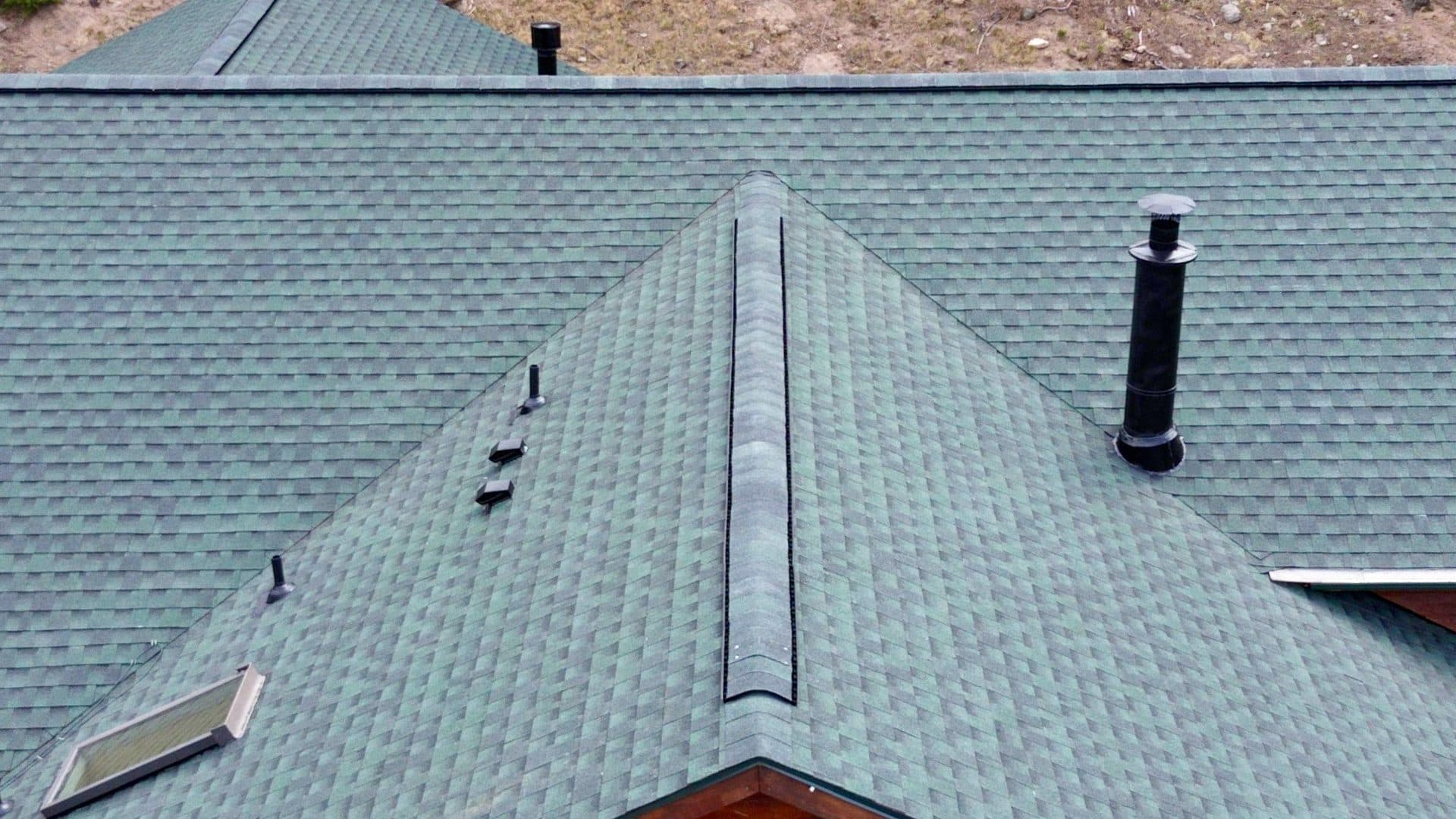
Ridge Vents run along the peak of the roof and allow hot air to escape along the entire length of the ridge. When paired with soffit vents, they create a continuous airflow path from bottom to top. Ridge vents are low-profile, work passively without any moving parts, and distribute exhaust evenly across the attic. They're one of the most effective and widely used exhaust options available. The photo with this post shows a ridge vent we installed on a home in Evergreen.
Soffit Vents are installed in the underside of the roof overhang and serve as the intake side of the system. They come in continuous strip form or as individual circular or rectangular vents. Without adequate soffit venting, even a well-designed exhaust system will underperform.
Box Vents (Static Vents) are individual exhaust vents installed near the roof peak. They work passively, like ridge vents, but cover a smaller area per unit. Multiple box vents are often needed to match the exhaust capacity of a continuous ridge vent. They're a reasonable option on roofs where a ridge vent isn't practical.
Power Ventilators (Attic Fans) use electricity to actively pull hot air out of the attic. They're effective at moving air quickly, but they come with tradeoffs. If your attic isn't well-sealed from your living space, a powered fan can actually pull conditioned air up from your home, which defeats the energy efficiency purpose. They also require electricity and have mechanical components that can fail over time.
Gable Vents are installed on the triangular end walls of the attic. They can work in combination with other vents, but as a standalone system they rely on wind direction, which isn't consistent. They're common on older homes and still functional in many cases, but they don't replace a balanced soffit-and-ridge system.
Turbine Vents spin in the wind to draw air out of the attic. They're inexpensive and require no electricity, but their effectiveness depends on wind, and the moving parts wear out over time.
Why a New Roof Is the Right Time to Assess Ventilation
When a roofing contractor removes your old shingles, the entire roof deck is exposed. That's the best possible time to evaluate your ventilation setup, because adding or modifying vents at that stage is far less labor-intensive than doing it as a standalone project later. If your current system is unbalanced, undersized, or missing soffit intake entirely, addressing it during a roofing project makes practical and financial sense. Any reputable contractor should walk you through what's currently in place and whether it's adequate before the new material goes on.
ENERGY STAR also notes that proper attic air sealing and ventilation can contribute meaningfully to home energy performance. Particularly in climates with significant temperature swings, which describes most of Colorado's Front Range.
What You Can Do Right Now
If you're not planning a roof replacement anytime soon, you can still do a basic check. Look at your soffits from outside and confirm the vents aren't painted over, blocked by insulation, or clogged with debris. If you have attic access, go up on a cool morning and check whether there's visible light coming through soffit vents. Note whether you have exhaust vents near the ridge, and roughly how many. If something looks off, it's worth having a contractor take a look before it becomes a bigger problem.
Good attic ventilation isn't complicated, but it does require the right components in the right places, sized and balanced appropriately for your roof. Getting it right protects your shingles, your structure, and your energy costs over the long run.
Frequently Asked Questions
How do I know if my attic has enough ventilation?
A starting point is checking whether you have both intake vents (typically in the soffits) and exhaust vents (near the ridge or peak). If you can access your attic, check for signs of moisture, staining, or condensation on the sheathing, which can indicate inadequate airflow. A roofing contractor can assess your current setup and calculate whether your intake and exhaust capacity are balanced for your attic's square footage.
Can I have too much attic ventilation?
Too much exhaust relative to intake can create negative pressure in the attic, which may draw conditioned air up from your living space. The goal is balance. The general rule of thumb in the roofing industry is one square foot of net free ventilation area for every 150 square feet of attic floor space, split evenly between intake and exhaust. Your local building code or contractor may adjust this based on your specific roof design.
Will better attic ventilation lower my energy bills?
It can, particularly in summer. An overheated attic adds to the cooling load on your home, meaning your air conditioner runs longer to maintain comfortable temperatures. Reducing that heat buildup through proper ventilation helps, though the impact will vary depending on your insulation, air sealing, and how much heat transfer currently occurs between your attic and living space.
Does attic ventilation help prevent ice dams?
Yes. Ice dams form when heat escaping from the living space warms the roof deck, melting snow that then refreezes at the cold eaves. Keeping the attic closer to outdoor temperatures through proper ventilation reduces that heat transfer and lowers the risk of ice dam formation. Attic air sealing works alongside ventilation to address this problem at its source.
Is a ridge vent better than individual box vents?
For most residential roofs, a continuous ridge vent paired with soffit intake is generally considered more effective than box vents because it distributes exhaust evenly across the full length of the attic. Box vents can work well and are a practical choice when roof geometry makes a ridge vent difficult to install, but they typically require multiple units to achieve comparable coverage.