Colorado's New Wildfire Insurance Law: What Homeowners Need to Know About Mitigation Discounts
A new Colorado law that took effect July 1, 2026 gives homeowners more visibility into how insurers are pricing wildfire risk - and more tools to push back if those prices don't reflect the steps you've taken to protect your home. If you've seen your premium increase or received a non-renewal notice tied to wildfire risk, here's what the law does and how fire-resistant exterior upgrades fit into the picture.
What HB25-1182 Requires
House Bill 25-1182 targets a specific problem: insurers have been using wildfire risk scores to raise premiums, add surcharges, or decline to renew policies, often without telling homeowners what score they received or why.
Under the new law, insurers that use a wildfire risk score must send you an annual written notice that includes your score, the risk classification they assigned, and any mitigation discounts you may qualify for. They're also required to post premium-savings and appeal information publicly on their websites, so you don't have to guess what options exist.
You now have the right to see your wildfire risk score and appeal it directly to your insurer if you believe it's inaccurate. And if an insurer's risk model doesn't already account for property-level or community-level mitigation, they must offer discounts to homeowners who can demonstrate they've taken steps to reduce fire risk.
This isn't a guarantee of savings. The law doesn't set specific discount amounts. But it does require that the pathway to those discounts be transparent and accessible.
Where Roofing and Siding Fit In
Fire-resistant exterior upgrades are among the most consequential changes a homeowner can make from a wildfire risk standpoint. Embers carried by wind are the primary way wildfires spread to homes, and the roof and exterior walls are the most vulnerable surfaces.
A Class A fire-rated roof is the highest rating available for roofing materials, indicating the greatest resistance to fire exposure. Fiber cement siding, such as James Hardie products, is noncombustible. It won't ignite from ember contact the way wood or vinyl can.
These are the kinds of property-level improvements the law is designed to recognize. Whether a specific product qualifies you for a discount depends on your insurer and the mitigation standards they apply, so the upgrade alone isn't a guaranteed outcome. But if you've already made these improvements, you now have a legal basis to ask your insurer to account for them.
The Detail Most Homeowners Miss: Ember Entry Points
Upgrading the main field of your siding is a meaningful step, but embers don't just land on walls. Soffits and overhangs are common ember-entry points in a wildfire, and if those materials are combustible, they create a vulnerability even if your walls aren't.
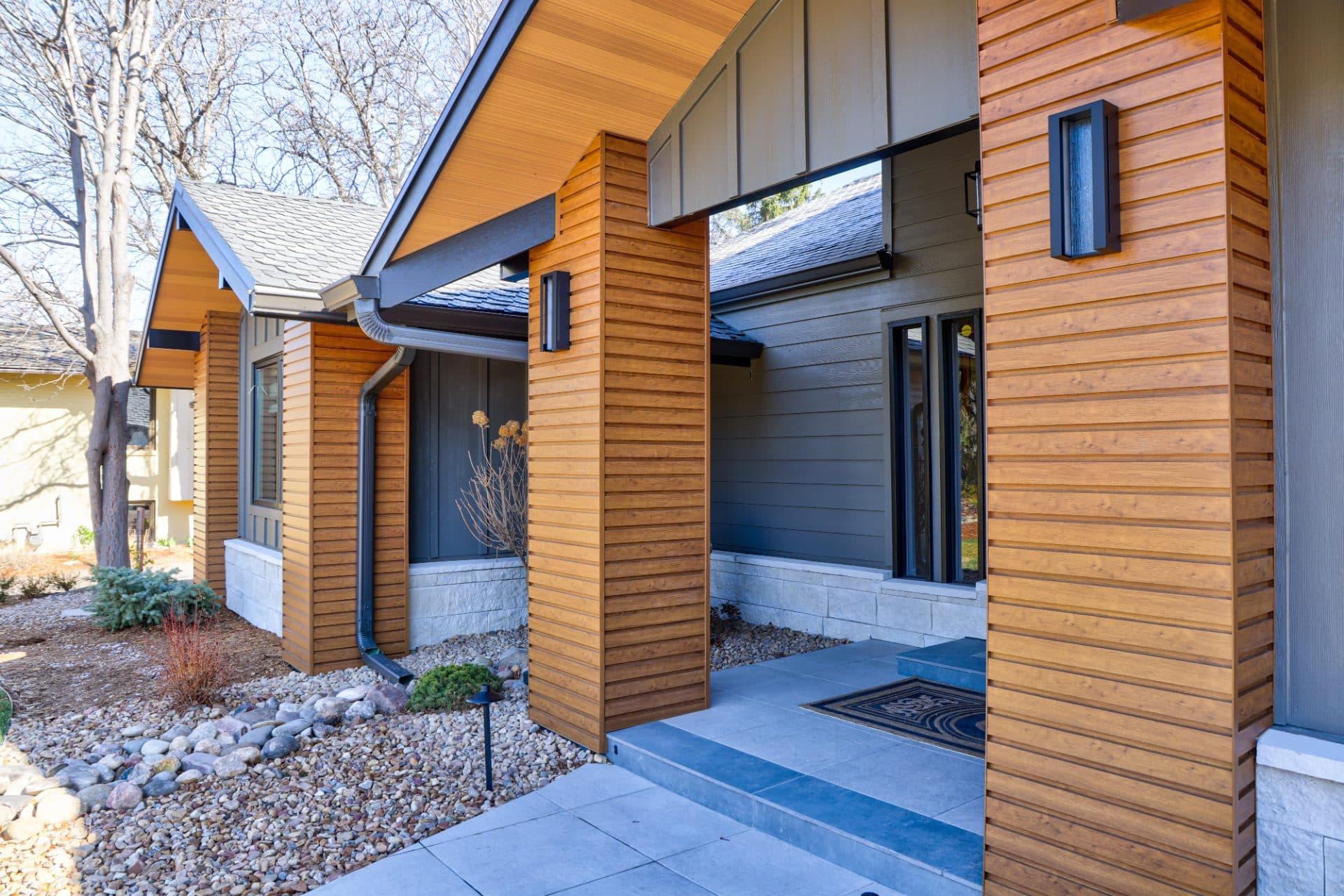
A home we worked on in Boulder pairs fiber cement siding with noncombustible steel soffits and aluminum column wraps, so the walls, overhangs, and columns present a continuous noncombustible surface. This kind of whole-assembly approach impacts both for fire performance and for how insurers evaluate a home's risk profile.
Who This Is Most Important For
The law is relevant statewide, but it's most important for homeowners in wildland-urban-interface areas where risk scores have been driving premium increases and non-renewals at the highest rates. That includes communities along the Front Range foothills: Evergreen, Golden, Morrison, Boulder, and similar areas where the fire risk environment is more complex.
If you're in one of these areas and you've received a surcharge or a non-renewal, this law gives you concrete tools. You can request your score, review the reasoning, appeal if something looks wrong, and ask specifically what mitigation credits apply and how to document improvements you've already made.
What to Do Next
Start with your insurer. Ask them to provide your current wildfire risk score and the mitigation discounts available under their model. If they use a wildfire risk score, they're now required to give you this information in writing.
If you have questions about how the law works or want to file a complaint, the Colorado Division of Insurance is the right contact. Not a contractor. We can help with the exterior work; the insurance side of this conversation belongs with your carrier and, if needed, the state.
If you're considering fiber cement siding or a new roof as part of a broader effort to reduce your home's fire risk, document everything: the materials used, their fire ratings, installation dates, and any product certifications.
Frequently Asked Questions
Does upgrading to fiber cement siding automatically lower my insurance premium?
Not automatically. HB25-1182 requires certain insurers to offer mitigation discounts, but the specific discount amounts and qualifying criteria vary by insurer. Upgrading to a noncombustible material like fiber cement siding puts you in a stronger position to request a discount, but you'll need to work directly with your carrier to find out what their model recognizes and how to document your improvements.
What is a wildfire risk score, and how do I find out mine?
Insurers that use wildfire risk scoring models assign individual properties a score based on factors like location, vegetation, topography, and in some cases, construction features. Under HB25-1182, any insurer using such a score must now provide it to you in an annual written notice. If you haven't received one, contact your insurer directly and ask.
Can I appeal my wildfire risk score if I think it's wrong?
Yes. The law gives you the right to appeal your score directly to your insurer. If your home has features that reduce fire risk. Noncombustible siding, a Class A roof, defensible space. And those aren't reflected in your score, that's grounds for an appeal. Keep documentation of any improvements and their specifications.
What's the difference between a Class A roof rating and other ratings?
Fire ratings for roofing materials run from Class A (highest resistance) to Class C (lowest). The rating reflects how well a material resists fire exposure from outside the structure. Class A materials include certain asphalt shingles, metal roofing, and concrete or clay tile. If you're not sure what your current roof is rated, a roofing contractor can help you identify the material and its rating.
Where can I get help if my insurer won't provide my score or denies my appeal?
The Colorado Division of Insurance handles consumer complaints related to insurance practices in the state. If you believe your insurer isn't complying with HB25-1182, that's the appropriate place to bring your concern. You can reach them through the Colorado Department of Regulatory Agencies website.