
Soffits and Fascia: A Deep Dive
Most homeowners know when their siding looks worn or their trim needs attention. Soffits and fascia tend to stay out of sight and, as a result, out of mind. But these components are important too, and understanding what they do helps you make smarter decisions when your exterior needs attention.
What Are Soffits and Fascia?
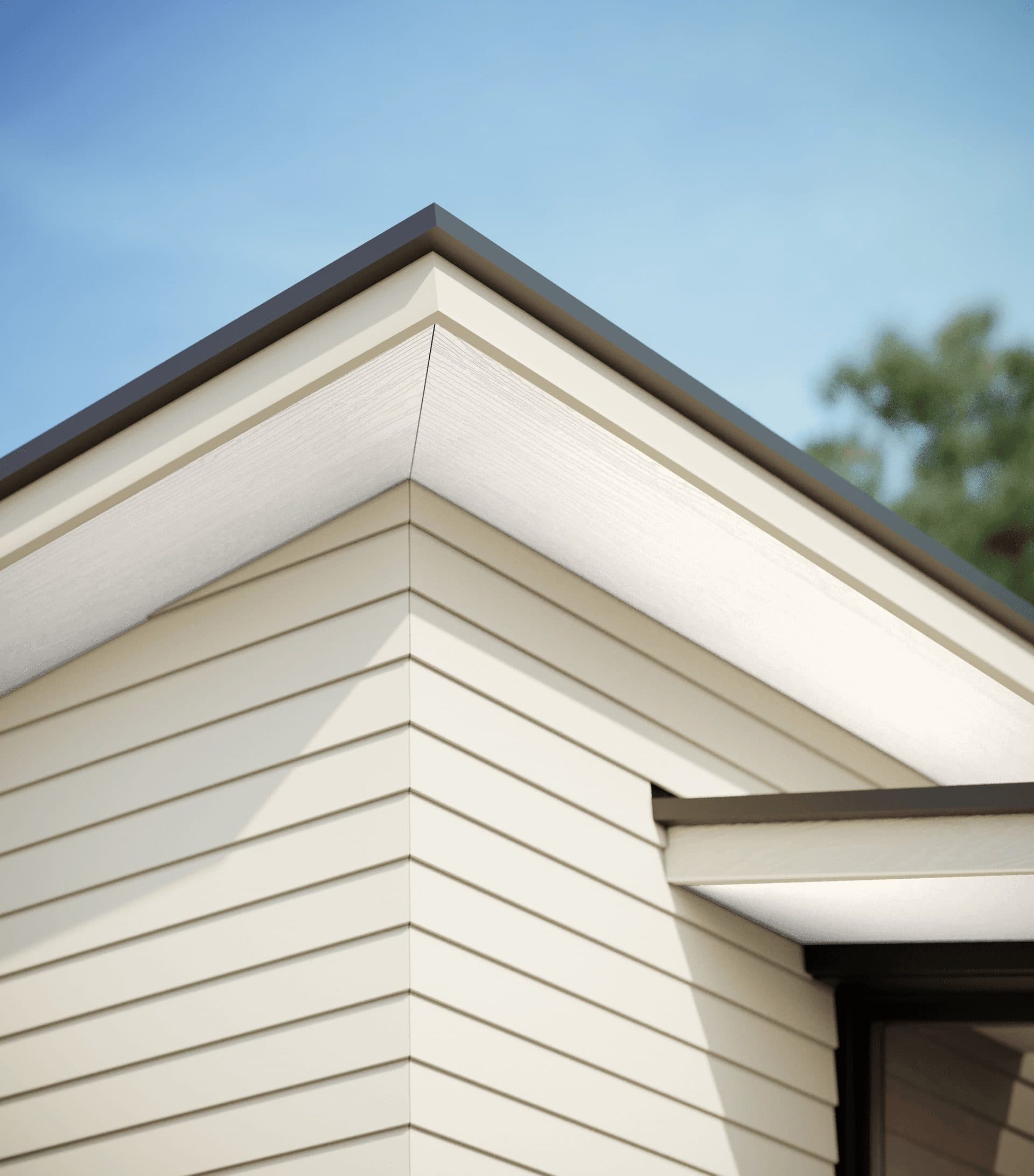
The fascia is the vertical board that runs along the lower edge of your roofline, sitting just behind your gutters. It caps the ends of your roof rafters and gives the roofline a finished, clean edge.
The soffit is the horizontal surface tucked underneath the roofline overhang, between the fascia and the exterior wall of your home. If you stand at the edge of your house and look up at the overhang, what you're looking at is your soffit.
Together, they close off the underside of your roof structure from the outside. They also have functional roles that go well beyond appearance.
How Soffits Support Attic Ventilation
One of the soffit's most important jobs is ventilation. Vented soffits have small perforations that allow outside air to enter the attic space. That intake air travels upward through the attic and exits through exhaust vents at or near the ridge of the roof.
This continuous airflow matters year-round. In summer, it helps prevent heat from building up in the attic, which can stress your roofing materials and drive up cooling costs. In winter, it helps keep the attic cold, which reduces the risk of ice dams forming at the roof's edge.
Soffit venting is one piece of a complete attic ventilation system. For the system to work properly, there needs to be a clear path for air to move from the intake at the soffit to the exhaust at the ridge. Blocked or damaged soffits interrupt that flow, and the effects can show up in your energy bills, your roofing materials, and even in moisture problems inside the attic.
The Connection Between Fascia and Gutters
Your gutters hang from your fascia. Specifically, gutter hangers are fastened directly into the fascia board, which means the condition of your fascia determines how securely your gutters are attached. When fascia deteriorates from rot, moisture damage, or age, it can no longer hold that hardware properly. Gutters start to pull away, slope incorrectly, or separate from the home.
Here's something worth knowing before you start a project: when fascia is replaced, the gutters have to come down. They're attached to it, so there's no way around that step. If your gutters are already at or near the end of their useful life, that removal presents a practical opportunity. Rather than removing, storing, and reinstalling aging gutters, doing the gutter replacement at the same time as the fascia eliminates one round of labor. You're already there. The gutters are already off. Combining the work typically costs less than scheduling two separate projects.
Why Soffits and Fascia Often Need Replacing When Siding Does
If your home's siding and exterior trim are due for replacement, it's worth taking a close look at your soffits and fascia at the same time. In most cases, all of these components were installed together, during the same construction phase or prior renovation. They're made from the same materials, they've been exposed to the same weather, and they've aged in parallel.
Replacing siding while leaving behind original soffits and fascia can create a mismatch in both appearance and longevity. Your new siding may last decades. The old soffits and fascia beside it may fail in a fraction of that time, requiring a second round of work. Doing everything together in one coordinated project usually makes more sense, both functionally and financially.
When it comes to material selection, fiber cement is worth considering for soffits and fascia. James Hardie manufactures soffit panels specifically designed for this application, including vented options that maintain airflow while offering the same durability and resistance to moisture and rot that fiber cement siding provides.
What to Check Before You Decide
Before any exterior project, walk the perimeter of your home and look up at the roofline. You're looking for:
- Peeling paint or visible staining on the fascia or soffit surface
- Soft or spongy fascia, which usually indicates rot behind the surface
- Gaps, cracks, or sagging in the soffit panels
- Pest activity, as damaged soffits are a common entry point for birds, wasps, and rodents
- Gutters pulling away from the roofline, which can signal fascia deterioration beneath
If you see any of these, it's time to take a closer look. A contractor doing a siding or roofing estimate should be walking the roofline and looking at these components anyway. If they're not, ask them to.
Putting It Together
Soffits and fascia are easy to overlook because they don't demand attention the way a leaking roof or damaged siding does. But they're part of a connected system, and the decisions you make about them affect your attic ventilation, your gutter performance, and the long-term integrity of the work you're investing in. When your exterior is already open for a project, understanding how these components relate to each other helps you make a more complete, informed decision.
Frequently Asked Questions
What is the difference between a soffit and fascia?
Fascia is the vertical board running along the lower edge of the roofline, directly behind the gutters. Soffit is the horizontal surface that spans the underside of the roof overhang, between the fascia and the exterior wall. Both close off the roofline and contribute to the appearance and function of the exterior.
Do soffits need to be vented?
Vented soffits are standard in most residential construction because they serve as the intake portion of the attic ventilation system. Whether your soffits need to be vented depends on your attic's overall ventilation design. In most cases, replacing non-vented soffits with vented panels is a worthwhile upgrade, but the decision should account for how your attic exhausts air as well.
Can I replace fascia without replacing my gutters?
Technically, gutters can be removed, stored, and reinstalled when fascia is replaced. Whether that makes sense depends on the condition of the gutters. If they're in good shape and have years of useful life left, reinstalling them is reasonable. If they're older or already showing problems, replacing them at the same time as the fascia avoids paying for a second round of labor to remove and reinstall them later.
What materials are soffits and fascia typically made from?
Common materials include vinyl, aluminum, wood, and fiber cement. Wood offers a traditional look but is susceptible to rot and moisture damage over time. Vinyl and aluminum are lower maintenance but can crack, fade, or dent. Fiber cement, such as James Hardie soffit panels, is more durable and resistant to moisture, rot, and impact, which makes it a strong option when replacing siding with fiber cement products at the same time.
How do I know if my fascia is rotting?
The most reliable way to check is to press firmly on the surface of the fascia board with your thumb or a screwdriver handle. Solid wood will feel hard and firm. Rotting wood will feel soft, spongy, or give under light pressure. Peeling paint, dark staining, or gutters pulling away from the house are also common signs that the fascia behind them has been compromised by moisture.