
The Complete Guide to Pella Windows and Doors for Colorado Homeowners
If you're shopping for new windows or doors, Pella is one of the most recognized names you'll encounter. That recognition is earned. Pella has been manufacturing windows and doors in the United States since 1925, and their product line covers nearly every application a homeowner might need. This guide walks through what makes Pella products worth considering, how their lines compare, why they perform well in Colorado's climate specifically, and what to look for when you're ready to buy.
Why Pella Is Considered a Premium Product
The difference between window products becomes clear when you look closely at materials, construction, and warranties.
Pella manufactures windows and doors in wood, fiberglass, vinyl, and aluminum-clad wood. Their higher-end lines use interior wood construction with exterior aluminum cladding, which gives you the aesthetic warmth of real wood inside without exposing it to weather on the outside. Their fiberglass options are dimensionally stable, meaning they expand and contract less with temperature changes than vinyl does. A meaningful advantage in a climate like Colorado's.
What sets premium windows apart from builder-grade products comes down to a few things: glass packages, frame construction, and hardware. Pella invests in all three. Their hardware is built for long-term operation and daily use.
Pella also offers some of the more comprehensive warranties in the industry. Specifics vary by product line, so it's worth reviewing the details on Pella's website or asking your contractor before you buy.
How Pella's Product Lines Compare
Pella organizes their products into a few main series. Understanding the differences helps you match the right product to your budget and priorities.
Encompass by Pella. The entry-level option. Easy-care vinyl at a competitive price point, available at Lowe's. A solid choice for homeowners who want dependable, low-maintenance performance.
Pella 250 Series. A step up in vinyl, with stronger frames, more configuration options, and glass package upgrades available. This is the line most commonly installed by Pella certified contractors.
Pella Impervia. Built with Pella's proprietary fiberglass, this series is one of their most durable. Fiberglass is stronger than vinyl and holds its shape better across temperature extremes, making it a good fit for Colorado. Available with optional foam-insulated frames and triple-pane glass for added performance in extreme climates.
Pella Lifestyle Series. Wood interior with roll-form aluminum-clad exterior. A strong performer on energy efficiency and noise reduction. Pella markets it as their top wood window for the combination of energy, sound, and value. Integrated blinds and shades are available on triple-pane units, sealed between the glass panes and protected from dust and damage.
Pella Reserve. Pella's premium wood window line. Also wood interior with aluminum cladding, but Reserve uses extruded aluminum rather than roll-form, a more durable construction process that adds strength and longevity. Available in Traditional and Contemporary configurations. These are the windows you choose when aesthetics and craftsmanship are the top priority.
For most Colorado homeowners replacing older windows, the Impervia or 250 Series are common choices. For new construction or high-end remodels, Reserve and Lifestyle Series see more use. You can review the full product details in our Pella product guide.
Why Pella Performs Well in Colorado
Colorado's climate is demanding on windows and doors. Temperatures in the Denver metro and Front Range regularly swing 40 to 50 degrees in a single day. UV exposure at elevation is intense. And freeze-thaw cycles are frequent through fall, winter, and spring.
A few things to pay attention to when buying windows for Colorado:
U-factor measures how well a window insulates. Lower is better. In Colorado's mixed climate, you generally want a U-factor at or below 0.30 for good thermal performance.
Solar Heat Gain Coefficient (SHGC) measures how much solar heat passes through the glass. Colorado gets significant winter sun, so some homeowners prefer a higher SHGC on south-facing windows to help with passive heating, and a lower SHGC on west-facing windows to reduce afternoon heat gain.
Low-E glass coatings are standard on most Pella products. These coatings reduce heat transfer and UV transmission without noticeably affecting visibility. They help keep interiors cooler in summer and warmer in winter.
Pella's fiberglass and aluminum-clad wood frames hold up well to Colorado's temperature swings. Vinyl expands and contracts more with heat and cold, which over time can affect seals and operation. The right choice depends on exposure and orientation, and it's worth factoring into your decision.
ENERGY STAR certifies windows and doors that meet climate-specific performance thresholds. Many Pella products carry ENERGY STAR certification for the Northern or North-Central climate zones, which includes most of Colorado.
What Pella Certified Contractor Status Means
Pella certifies contractors who meet their standards for installation training, product knowledge, and customer service. This matters because even the best window depends on proper installation to perform. Air leakage, water infiltration, and operational issues are almost always tied to installation quality.
As a Pella Certified Contractor, we've completed Pella's installation training and are authorized to sell and install their products. Certified contractors also have a direct relationship with Pella, which helps if warranty issues arise after installation.
When you're comparing contractors, asking whether they're Pella-certified is a reasonable question. It means the installer knows the product they're working with and has a direct line to the manufacturer if anything needs to be resolved.
What to Look for When Shopping for Windows
A few practical things to keep in mind as you evaluate options:
Get your U-factor and SHGC in writing. Any reputable window contractor should be able to provide this before you sign anything. It's a straightforward ask and a good way to evaluate who you're working with.
Understand what the warranty covers and who backs it. Some warranties are manufacturer warranties, some are contractor warranties, and some are both. Know the difference.
Ask about the rough opening and any structural modifications. Replacement windows (insert replacements) go into the existing frame. Full-frame replacements remove everything down to the rough opening. Full-frame work is more involved and more expensive, but sometimes necessary if the existing frame needs attention or you're changing the size of the opening.
Look at the hardware and operation. Open and close a sample window if you can. Smooth, solid operation with no play in the sash is a sign of quality construction.
Pella Doors
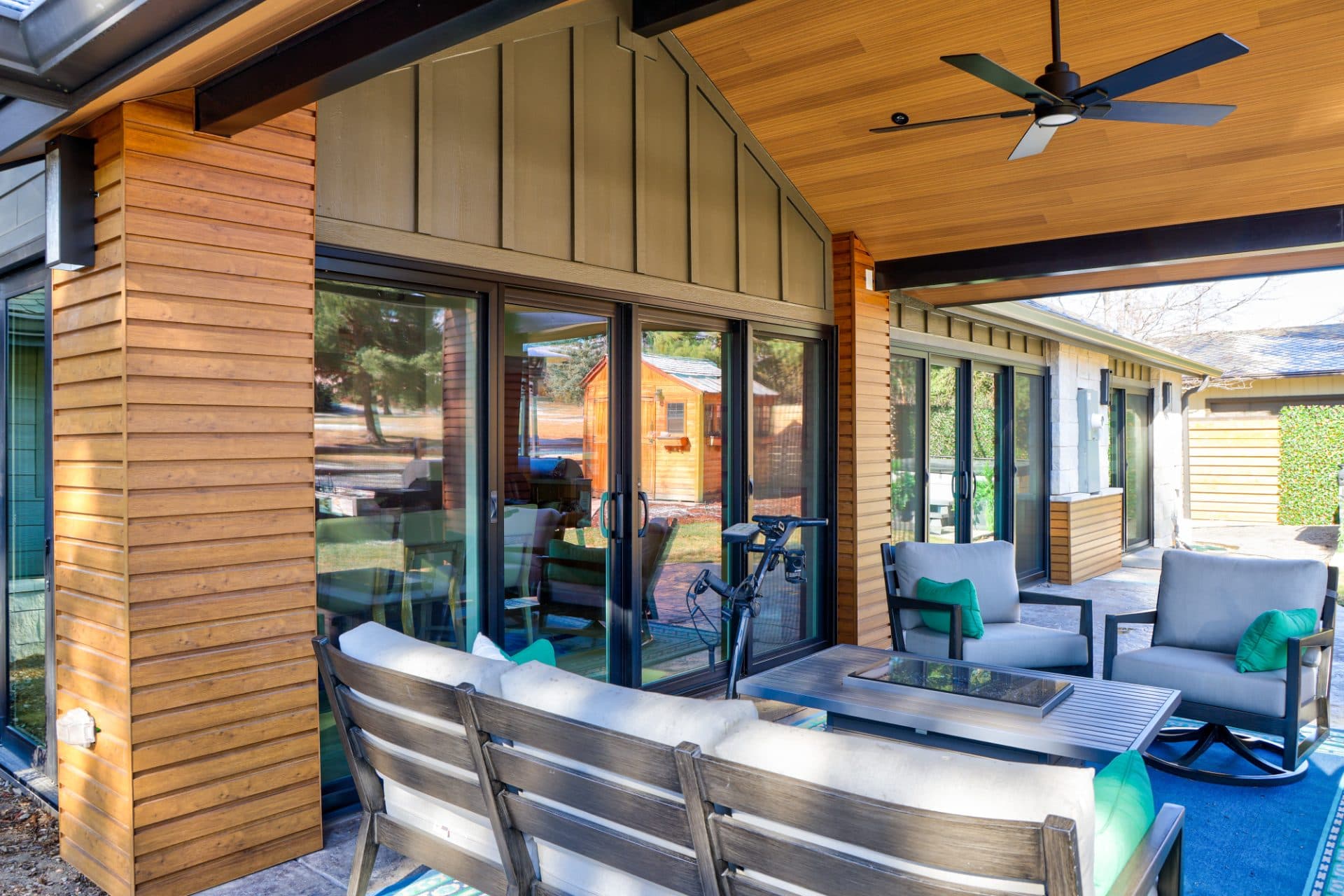
Pella manufactures a full range of exterior doors alongside their windows, including entry doors, patio doors, and sliding glass doors. Their patio door systems (like the ones we installed on a project in Boulder, CO) are available in hinged and sliding configurations, with the same material and glass options as their window lines.
For homes with a view or direct outdoor access, a quality patio door makes a significant difference in both energy performance and daily use. Pella's patio doors are available with multi-point locking hardware and the same Low-E glass packages as their windows.
If you're replacing both windows and doors in a project, using the same product line helps ensure consistent performance specs and a cohesive look.
If you want to explore specific Pella products for your home, our Pella windows page covers what we install and how we approach the process.
Frequently Asked Questions
How long do Pella windows typically last?
With proper installation and basic maintenance, Pella windows in their mid-range and premium lines are designed to last 20 to 30 years or more. Fiberglass and aluminum-clad wood options tend to hold up the longest in harsh climates. Vinyl windows generally perform best in more temperate conditions, so exposure and climate are worth weighing when choosing your material.
What's the difference between a replacement window and a new construction window?
A replacement window (also called an insert) fits inside your existing window frame. It's less disruptive and less expensive, and it's the right choice when your existing frames are in good condition. A new construction window requires removing the existing window and frame entirely and installing into the rough opening. This is the better option when frames need attention or when you're changing the size of the opening.
Are Pella windows ENERGY STAR certified?
Many Pella products carry ENERGY STAR certification. Certification is specific to climate zone and product line, so confirm that the specific window you're considering is certified for Colorado's climate zone. Your contractor or the Pella website can confirm this for any product you're evaluating.
Does Pella certification matter when choosing a contractor?
It's one meaningful factor among several. Pella-certified contractors have completed product-specific installation training and have a direct relationship with the manufacturer, both of which are useful if anything needs to be resolved after installation. It's a reasonable baseline to look for when comparing contractors.