
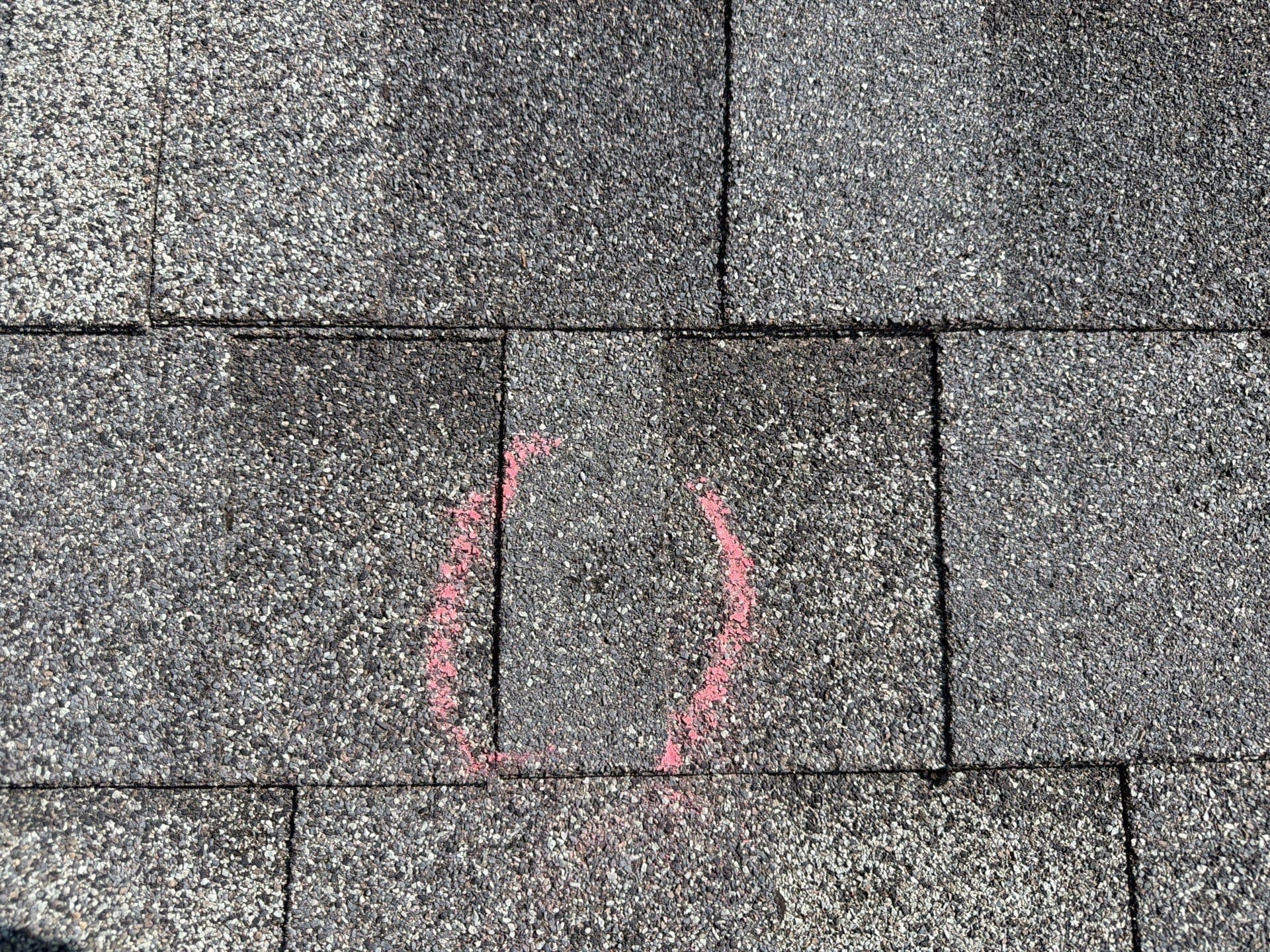
What Hail Damage on a Roof Looks Like
Most homeowners walk outside after a hailstorm, look up at the roof, and think it looks fine. No visible holes, no missing shingles, no obvious catastrophe. That's actually one of the trickiest things about hail damage. It often doesn't look like much at first, but what often barely looks like damage sets off a slow process of deterioration that eventually leads to issues.
The Granules
Asphalt shingles are coated in granules - the small, sand-like particles embedded into the surface. Granules protect the asphalt layer underneath from UV exposure and physical wear. When hail strikes a shingle, it knocks those granules loose, leaving a bare or thinned spot on the surface.
That spot might look like a small dark patch or a slightly discolored circle. It's easy to dismiss. But the asphalt underneath is now directly exposed to sun, rain, and temperature swings.
How the Degradation Happens
Once the granule layer is compromised, the exposed asphalt starts to dry out. UV rays accelerate this process, causing the asphalt to become brittle over time. As it dries and hardens, it starts to crack. Those cracks allow water to penetrate, and once water is moving through the shingle layer, the underlayment and decking beneath it are next.
This doesn't happen overnight. Depending on conditions, it can take anywhere from a year to several years for a hail impact spot to develop into an actual hole. But when it does, you have a leak. And by that point, there's often damage to the decking, insulation, or interior of the home that wouldn't have been there if the shingle had been caught and addressed earlier.
The IBHS has documented how hail impacts compromise roofing materials in ways that aren't visible to the untrained eye but meaningfully shorten the life of a roof. A shingle that looks passable from the ground may already be years past the point where it can do its job.
What It Looks Like
Here's what it looks like on asphalt shingles:
- Dark circular spots where the granule surface is visibly thinner or missing
- Soft spots that feel slightly spongy when you press gently. This indicates the asphalt mat beneath has been bruised by the impact
- Granule accumulation in your gutters or at the base of your downspouts after a storm. This is often the first sign that shingles have taken a hit
Keep in mind that not all granule loss is hail-related. Normal aging causes some granule shedding. Hail damage tends to be more concentrated, appearing in clusters of impact points rather than evenly distributed across the surface.
How Professional Inspections and Insurance Documentation Work
Insurance claims for hail damage have a time window, and most policies require you to file within a certain period after the storm. This is why getting an inspection after a significant storm is important even if nothing looks wrong from ground level.
When we inspect a roof after a hailstorm, we're looking for the impact spots described above and mapping out where the damage is concentrated. We document each affected area with photos, note the size and frequency of impacts, and put together a written assessment that gives your insurance adjuster a clear picture of the damage.
You don't need to have a leak to file a claim. Granule loss from hail impacts is a legitimate, covered loss under most homeowner's insurance policies because it compromises the functional life of the roof, not just its appearance.
If You're Not Sure, Get It Looked At
After any storm that dropped hail larger than about an inch in diameter, it's worth having your roof inspected. You don't have to do anything with the information right away, but having an accurate picture of your roof's condition puts you in a much better position. Whether that means filing a claim, budgeting for future repairs, or simply knowing your roof is in better shape than you thought.
Frequently Asked Questions
How soon after a hailstorm should I have my roof inspected?
As soon as reasonably possible. Most homeowners insurance policies have a deadline for filing storm damage claims. Getting an inspection early gives you time to document damage properly and file before that window closes.
Can I inspect my roof for hail damage myself?
You can look for some signs from a ladder or by checking your gutters for granule buildup, but identifying the full extent of hail damage typically requires getting on the roof and knowing what to look for. A professional inspector will catch impact spots that are easy to miss, especially if they're subtle or concentrated in certain areas. It can also be dangerous to climb on roofs, so we don't recommend doing it yourself.
Does hail damage always cause immediate leaks?
Not usually. The damage starts as granule loss, and the degradation process that leads to a leak can take a year or more. That delay is actually part of what makes hail damage tricky. The roof appears to be working fine until it suddenly isn't.
What size hail causes roof damage?
Hail at or above one inch in diameter is generally considered large enough to damage asphalt shingles. That said, the severity also depends on wind speed during the storm, the age and condition of the shingles, and the angle of impact. Older or already-worn shingles can sustain damage from smaller hail.
Will my insurance cover hail damage if there are no leaks yet?
In most cases, yes. Homeowners insurance typically covers hail damage based on the impact to the roof's function and lifespan, not just whether a leak is present. Documented granule loss from a storm event is generally sufficient to support a claim. Review your specific policy and talk to your adjuster if you're unsure what's covered.