
Can Hail Damage Your Siding? What Homeowners Should Know
Most people think about their roof after a hailstorm. That makes sense. The roof takes the most direct impact. But if hail was large enough or falling at an angle, your siding may have taken a hit too. Understanding what hail damage looks like on siding, and which materials hold up best, can help you make a smarter assessment after a storm and a smarter decision if you're ever replacing your siding.
Hail Can Absolutely Damage Siding
Hail damages siding in a few different ways depending on the size of the stones, wind speed, and the direction of the storm. Smaller hail under an inch may not cause visible damage to most siding materials, but larger stones can crack, dent, chip, or puncture a variety of surfaces. Wind-driven hail is especially effective at reaching vertical surfaces like walls, since the stones are traveling at an angle rather than straight down.
The Insurance Institute for Business and Home Safety notes that hail causes billions of dollars in property damage each year, and siding is a significant part of that. After a major storm, it's worth walking around your home. Not just looking up.
How Hail Affects Different Siding Materials
Not all siding responds to hail the same way.
Vinyl siding is one of the most vulnerable. It becomes more brittle in cold temperatures, which means a hailstorm in late fall or early spring can crack panels that might have flexed and survived in warmer weather. Damage often appears as circular cracks or small holes, and it can be scattered across the wall in a pattern that matches the storm direction.
Wood siding tends to show hail damage as dents, splits, or surface gouging. Because wood is softer, even moderate hail can leave marks. Paint or stain can mask the damage initially, but moisture will eventually find its way in if the wood is compromised.
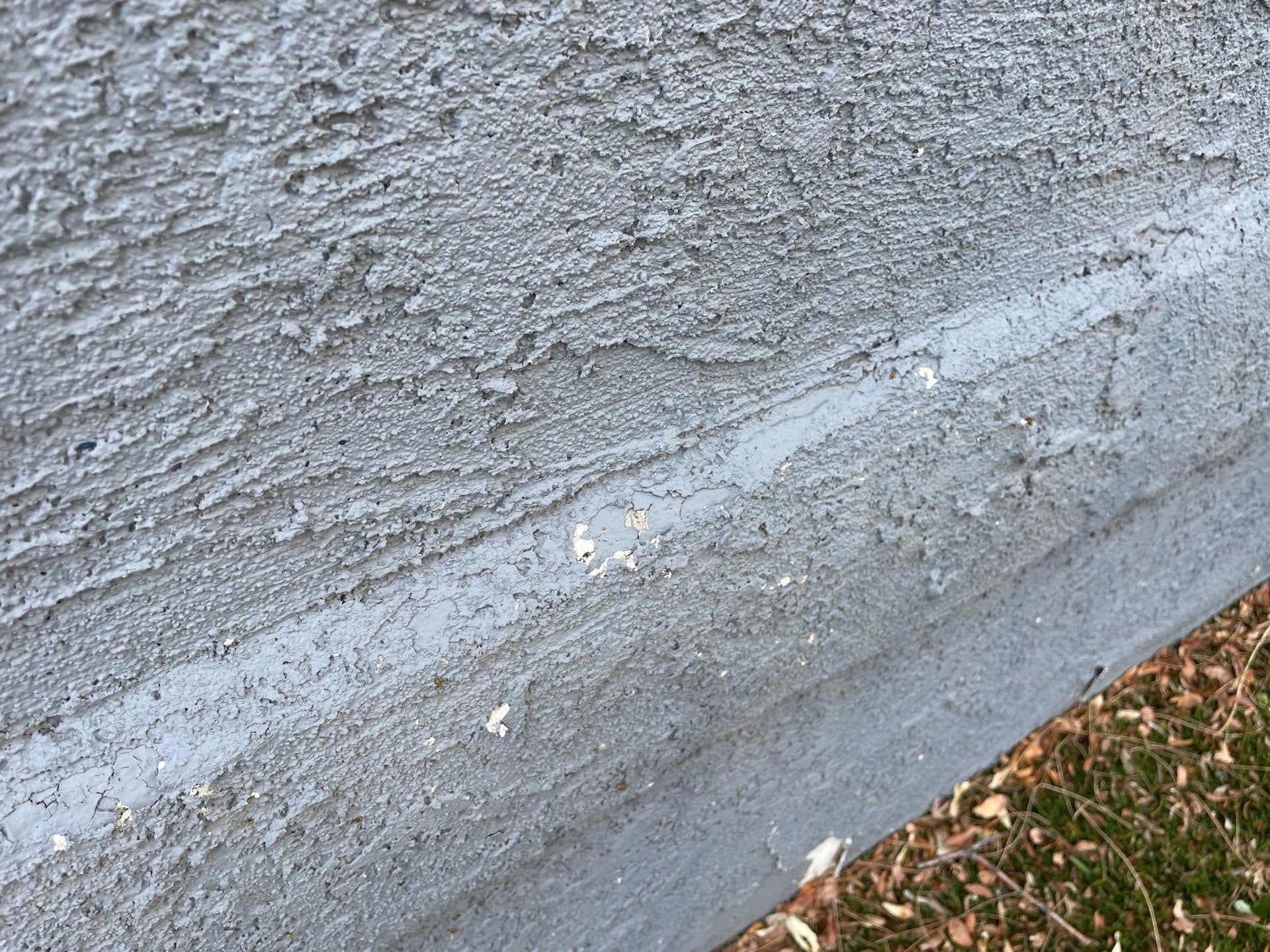
Stucco is a material many homeowners overlook when assessing hail damage. Hail can chip or crack stucco surfaces, and because stucco is a rigid material, damage can radiate outward from the point of impact in a spider-web pattern. Small cracks in stucco are worth taking seriously. Water infiltration through damaged stucco can lead to significant moisture problems behind the wall.
Aluminum siding dents fairly easily under hail impact. The dents won't allow water in the way cracks do, but they're often cosmetically significant and can be difficult or impossible to repair without replacing panels.
Fiber cement siding, such as James Hardie products, is notably more impact-resistant than vinyl, wood, or aluminum. It's a dense, rigid material that handles hail better than most alternatives.
Which Siding Materials Are Most Hail-Resistant
If you're in a part of Colorado that sees regular hailstorms, material choice matters. Here's a general ranking from most to least hail-resistant among common siding materials:
- Fiber cement (such as James Hardie). Dense and hard, resists cracking and denting well
- Engineered wood (such as LP SmartSide). More impact-resistant than natural wood, with a surface treatment that adds durability
- Aluminum. Dents but doesn't crack; protects the structure even when cosmetically damaged
- Natural wood. Moderate resistance, but softer and more susceptible to surface damage
- Vinyl. The most vulnerable, especially in cold weather
- Stucco. Rigid and prone to cracking; damaged areas need prompt attention to prevent water intrusion
No siding material is completely hailproof, but choosing a denser, harder material significantly reduces the likelihood of damage requiring repair or replacement after a storm.
What to Look For After a Storm
Walk the perimeter of your home after any significant hailstorm. Look for:
- Cracks, holes, or chips in siding panels
- Circular dents or impact marks
- Chipped or missing paint on wood surfaces
- Spider-web cracking in stucco
- Dented trim or soffit
It also helps to check your window screens and any aluminum gutters. These softer materials show hail impacts clearly and can serve as a useful indicator of storm severity. If your screens or gutters show significant damage, your siding deserves a close look too.
When to Call a Professional
Some hail damage is obvious. Some of it isn't. Particularly with stucco, where a small surface crack can hide a larger problem behind the wall. If you have any doubt about what you're seeing, or if you can't safely inspect certain areas of your home, having a siding contractor walk through the exterior with you is a reasonable step. A professional who knows what hail-damaged siding looks like across different materials can catch things that aren't obvious to an untrained eye.
The main thing is not to wait. Small cracks and punctures that seem minor can allow water behind the siding, and moisture damage compounds over time.
Frequently Asked Questions
Does homeowner's insurance cover hail damage to siding?
Usually, yes. Hail damage to siding is generally a covered peril under standard homeowner's insurance policies, but coverage details vary more than most people expect. Colorado homeowners especially need to review their policies closely. Some insurers have added separate hail or wind deductibles, and older siding may be paid out at actual cash value rather than replacement cost, which can leave a real gap between what you receive and what repairs actually cost.
Can hail damage siding without leaving obvious marks?
Yes, particularly with vinyl siding, where the damage can be small cracks that aren't immediately visible from a distance. Stucco can also sustain hairline cracks that aren't obvious until water has already begun infiltrating. A close-up inspection at eye level is more reliable than a quick look from across the yard.
How do I know if my stucco damage is from hail or something else?
Hail damage to stucco typically appears as clustered impact points distributed across the wall in a pattern that follows the storm direction. Each impact point may show chipping or small radiating cracks. Random, isolated cracking is more likely to be settling or thermal movement rather than hail. If you're unsure, a professional inspection is the most reliable way to determine the cause.
Is it worth replacing vinyl siding with a more impact-resistant material after a hail claim?
That depends on your situation and how often your area sees significant hail. If you've already filed one hail claim and you live in a region with frequent severe storms, upgrading to a more durable material at replacement time can be a reasonable long-term decision. The cost difference between vinyl and fiber cement isn't always as large as people expect, especially when you factor in the labor cost that's part of any siding replacement.
Can I repair just the damaged sections of siding, or does it need to be fully replaced?
Individual panels of vinyl and fiber cement can often be replaced rather than replacing the entire exterior. The main challenge with partial repairs is matching the existing color and profile, which can be difficult if your siding is older or if the product has been discontinued. A contractor who can source matching material is key for a repair that doesn't look patched.