Should I Redo My Insulation When I Replace My Siding?
If you're already planning a siding replacement, it's worth pausing before the project starts to ask one question: when are your walls going to be this accessible again? Siding work opens up access to your exterior walls in a way that almost never happens otherwise, and that access creates a real opportunity to address insulation and sheathing at the same time. Whether or not you take advantage of it depends on what's already there and what your home actually needs, but it's a decision worth making deliberately rather than by default.
What "Open Walls" Actually Means for Insulation
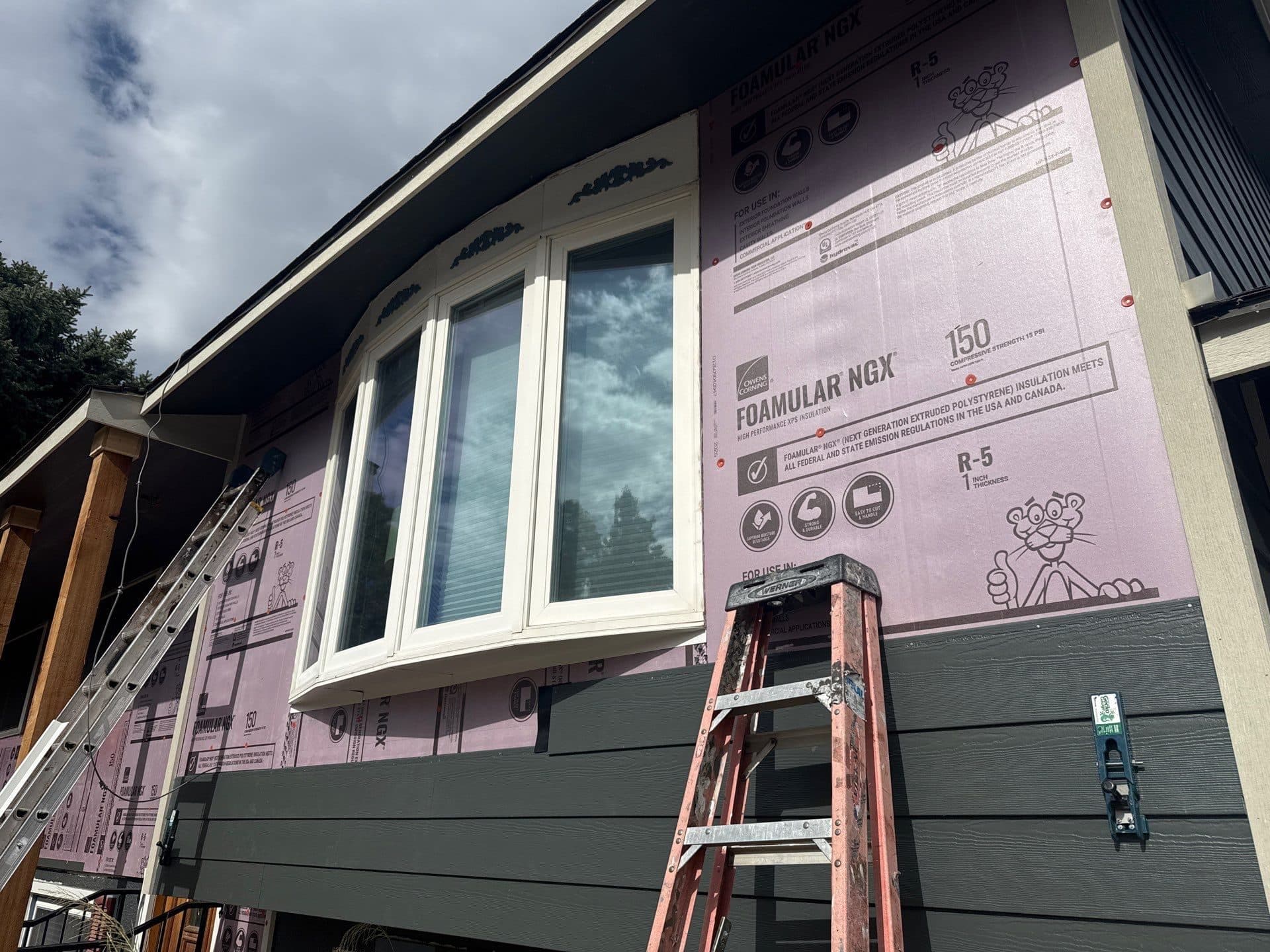
When your siding comes off, your contractor has direct access to the exterior wall sheathing. Depending on how your home is built, that means the opportunity to add continuous insulation over the sheathing before the new siding goes on, or to identify and address sheathing that has deteriorated and needs to be replaced.
This doesn't mean your walls are "open" the way they are during a gut renovation. Your interior drywall stays in place, and so does whatever insulation is already inside your wall cavities. What you're looking at is the exterior layer, which is a different opportunity than what you'd get from the inside.
The Case for Continuous Insulation
Most older homes have batt insulation between the studs and not much else. The problem with that approach is thermal bridging: heat moves through the wood studs themselves, which aren't insulated, and that reduces the effective performance of the wall system as a whole.
Adding a layer of rigid foam or mineral wool insulation continuously across the exterior of the wall, under the new siding, addresses that. It covers the studs, reduces thermal bridging, and can meaningfully improve your wall's overall thermal performance. This is a well-established building science concept, and ENERGY STAR guidance on home insulation and energy efficiency reflects it.
The thickness you can add depends on your siding system, your window and door returns, and your contractor's ability to adjust trim and flashing details accordingly. It's not always simple, but it's far more practical to do it now than to re-side the house a second time just to add it later.
Check Your Sheathing Before You Close It Back Up
Before insulation even comes up, it's worth having your contractor assess the condition of your existing sheathing as the old siding comes off. Sheathing can absorb moisture over years of exposure, especially if the original siding installation or flashing had gaps. Soft spots, delamination, or visible mold growth are signs that some or all of the sheathing may need to be replaced.
The EPA's guidance on mold is clear that addressing moisture problems at the source matters more than surface treatment. If your sheathing has been holding moisture, replacing it during the siding project is the right move. Putting new siding over damaged sheathing doesn't solve the underlying problem.
How to Think About the Decision
Not every home needs new insulation when the siding comes off. Here's a practical way to approach it:
- Find out what's already there. If your home was built before the mid-1980s, there's a reasonable chance the wall insulation is minimal or has settled and degraded. If you've noticed cold walls in winter or high heating and cooling bills, that's worth factoring in.
- Get an energy audit first. A home energy audit can identify where your biggest losses are. If your attic is poorly insulated, that's usually a higher priority than walls. But if your walls are the weak point, a siding project is the lowest-cost moment to address it.
- Ask your contractor what can be accommodated. Adding continuous insulation changes how trim, windows, and doors need to be detailed. Not every siding project can accommodate it without additional work, and you need an honest answer about what's feasible before you commit.
What You'll Regret Not Doing
The honest answer to the original question is: probably yes, at least investigate it. The incremental cost of adding insulation during a siding project is lower than doing it as a standalone project later, because the labor to access the wall is already being paid for. If your sheathing needs attention, now is when you'll find out. And the next time your exterior walls will be this accessible is probably never, or not for a very long time.
Talk to your contractor at the planning stage, not after the old siding is already gone. That's when your options are widest.
If you're thinking through a siding replacement on your Front Range home, or specifically considering James Hardie fiber cement siding, these are exactly the kinds of details worth sorting out before the project starts.
Frequently Asked Questions
Can I add insulation to my walls without replacing the siding?
Yes, but it's more disruptive and typically more expensive. Interior approaches involve removing drywall or drilling and injecting blown-in insulation through the wall cavities. Exterior approaches require removing the siding. If your siding is at or near end of life, combining that replacement with insulation work almost always makes more financial sense.
What type of insulation is used on the exterior of walls?
The most common options for exterior continuous insulation are rigid foam boards (such as XPS or polyisocyanurate) and mineral wool panels. Each has different R-values per inch, moisture characteristics, and fire ratings. Your contractor and the siding manufacturer's installation guidelines will inform which products are compatible with your specific siding system.
How much does adding continuous insulation affect the project cost?
It adds material and some additional labor cost, and may require adjustments to window and door trim. The actual impact varies based on the size of your home and how much insulation you're adding. The point is that doing it during a siding project costs less than doing it as a standalone project at any other time.
Will new insulation actually lower my energy bills?
Improving wall insulation can reduce heating and cooling costs, but the impact depends on what else is going on with your home's envelope. Attic insulation and air sealing often have a larger effect than wall insulation alone. A home energy audit gives you a clearer picture of where improvements will have the most impact before you make spending decisions.
What should I look for in my sheathing when the old siding comes off?
Have your contractor look for soft or spongy areas, discoloration, delamination (in OSB or plywood), and any visible mold. These are signs of moisture intrusion over time. If problem areas are localized, they can often be replaced in sections. If damage is widespread, a full sheathing replacement may be the right call before new siding goes on.