Storm Damage Repair in Denver, CO
A storm's worst damage is often the damage you can't see. A missing shingle or a downed limb is obvious, but the leaks that cost homeowners the most tend to begin somewhere you'd never spot from the yard — a loosened seal or a lifted edge that looks fine and quietly lets water in for months.
The Roofing & Siding Company handles storm damage of every kind across Denver and the Front Range — high wind, snow and ice, and windborne debris — from a fast first look to the full repair or rebuild. Acting quickly matters here, because small storm damage rarely stays small through a Colorado winter. If a storm has moved through, a free inspection will tell you what it actually did up top.
Everything handled
What's included
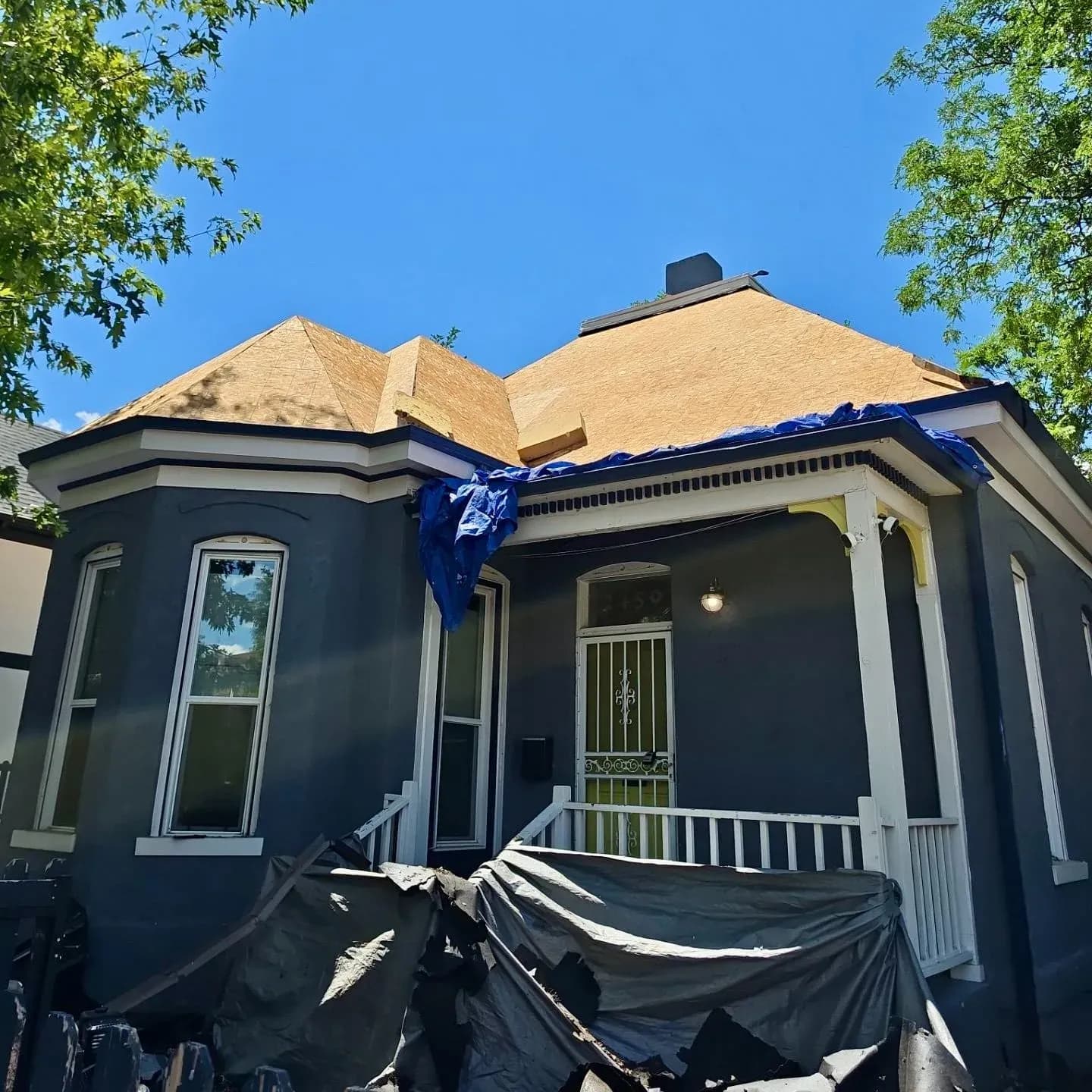
- Rapid inspection and emergency tarping when needed
- Wind, snow, and impact damage repair
- Insurance claim documentation and adjuster meetings
- Matching repairs that do not look like patches
- Full replacement when repair is no longer the honest answer
Straight talk
Worth knowing first
Tarp first, argue later
Stopping active water intrusion is step one and is covered by nearly every policy as emergency mitigation.
Wind damage hides
Lifted shingles can reseal visually while the nail line is broken. That is a leak waiting for spring.
Document everything
Date-stamped photos before cleanup make your claim. We shoot everything before we touch anything.
Simple process
How it works
Free estimate
We inspect, measure, photograph, and give you a detailed written quote. No pressure, no games.
Materials & schedule
Pick your products and colors with honest guidance, then get real dates you can plan around.
Done right
Certified installation, daily communication, full cleanup, and a walkthrough before we call it finished.
Pay over time
Financing up to $100,000 through Upgrade
Terms from 1 to 15 years, with 0% interest promotional options for qualified applicants. Checking your options takes a minute and does not affect your credit score.
What to Do Right After a Storm
The first hours after a storm matter, and a level head protects both your safety and your home:
Stay safe first: keep clear of downed power lines and sagging ceilings, and never climb onto a wet or damaged roof.
Contain interior water: move belongings out of the way and set out buckets or towels to limit indoor damage while help is on the way.
Document from the ground: photograph visible damage and any interior leaks before anything gets cleaned up or moved.
Note the date and the storm: writing down when it happened matters, since claims and inspections both hinge on tying damage to a specific event.
Call sooner than later: the faster a professional gets eyes on it, the less a small breach has time to become a big one.
Understanding Ice Dams
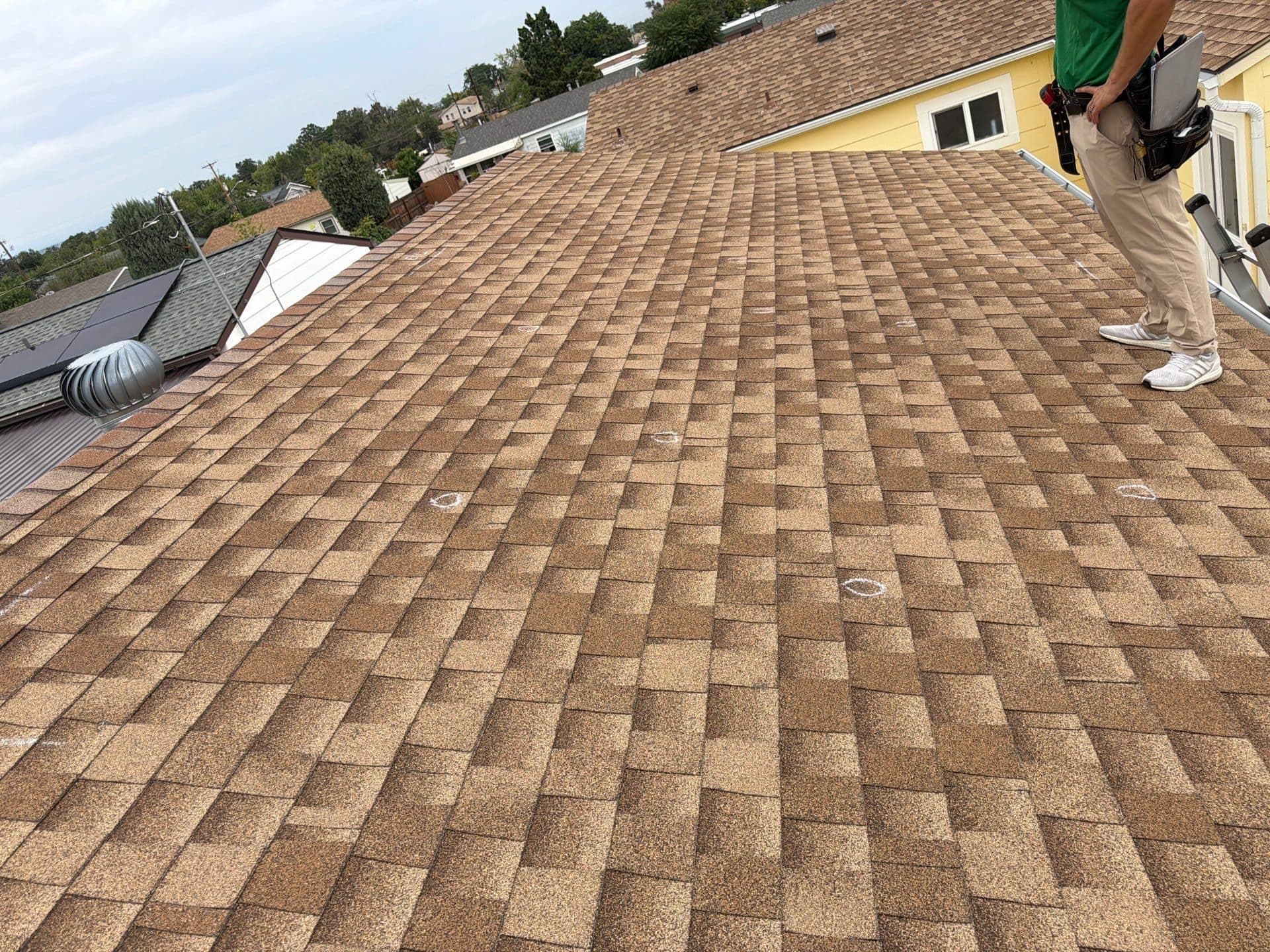
Ice dams are one of Colorado's most misunderstood roof problems, and they're not really a roofing failure at all — they begin in the attic. When heat escapes into the attic and warms the roof deck, it melts the snow above, which runs down to the cold eave and refreezes into a ridge of ice. That ridge then traps meltwater behind it, which backs up under the shingles and into the house. The real fix is rarely just the roof; it's the ventilation and insulation that let the deck warm unevenly in the first place. Treat the cause instead of chipping at the icicles, and the problem stops coming back every winter.
Why Choose The Roofing & Siding Company for Storm Damage Repair
When a storm hits, plenty of crews appear overnight and vanish just as fast, so reaching a company that's genuinely rooted here matters. The Roofing & Siding Company has repaired storm damage across Denver and the Front Range, and we answer our own phones from a shop at 6145 Broadway that isn't going anywhere. We're a GAF Certified Plus Contractor, licensed, fully insured, BBB accredited, and a Team Dave Logan member, and we'll give you the honest call on whether you're looking at a repair, a claim, or a full replacement. We serve Boulder, Littleton, Arvada, Golden, and the surrounding Front Range.
The Storms That Do the Damage Here
Colorado throws more than one kind of storm at a roof, and each leaves its own signature. Knowing what hit tells you what to look for:
High wind: downslope and chinook winds off the foothills can top 100 mph, lifting shingles, tearing off ridge caps, and peeling back edges and flashing.
Snow and ice: heavy, wet spring snow piles on structural load, while the freeze-thaw cycle drives water under shingles and builds ice dams at the eaves.
Windborne debris: branches and flying objects puncture and gouge roofing, and a fallen limb can crush a section outright.
Mixed storms: the worst events stack hail, wind, and driving rain together, layering several kinds of damage onto one roof.
Repair, or Something Bigger?
Not every storm means a new roof, and not every storm is as minor as it first appears. The right response ranges from a same-week repair to a full replacement, and the honest answer depends on how much of the roof took damage, how old it is, and whether the harm is cosmetic or structural.
A proper inspection sorts that out before you spend a dollar. Here's how we think through the storm scenarios we see most.
Spot Repair vs. Full Replacement
When damage is confined to one area and the rest of the roof is sound and reasonably young, a repair is usually the right, honest answer. The calculus shifts when the roof is older or the damage is spread across multiple slopes — at that point, repeated repairs can cost more than a replacement and still leave you with an aging roof. Matching also plays in: if a repair would stand out as an obvious patch on a weathered roof, that's a factor worth weighing rather than ignoring.
When It's an Insurance Claim
Wind and storm damage is often covered much like hail, and the claim follows a similar path — inspection, documentation, an adjuster visit, and an agreed scope. Rather than repeat all of it here, our hail damage restoration page walks through the full claims process step by step, including how the money actually arrives. We handle storm claims the same way: on your side, making sure the approved scope reflects what the storm truly did.
Cost and Financing for Storm Repairs
A minor storm repair is often a modest, out-of-pocket job, while cost climbs with the extent of the damage, the height and pitch of the roof, and how much has to be rebuilt. If the work is small and near your deductible, we'll give you the real number so you can decide whether a claim even makes sense. For larger repairs or a full replacement, financing is available up to $100,000 through Upgrade, with terms from 1 to 15 years and a pre-approval check that won't affect your credit score.
Building a Roof That Survives the Next One
The best time to think about the next storm is while you're already fixing the last one. If your roof seems to take damage every season, a few upgrades can change that:
Impact-resistant materials: Class 4 shingles, metal, and stone-coated steel shrug off hail and wind that shred standard roofs.
Reinforced edges and ridge: upgraded starter and ridge detailing with correct nailing patterns is where wind uplift is won or lost.
Better attic ventilation: balanced airflow is the single best defense against the ice dams that plague Front Range winters.
Modern underlayment: a full ice-and-water and synthetic underlayment layer is your backup the day the surface is breached.
The Damage People Miss After a Storm
Flashing and Sealants
Wind and debris loosen flashing and crack the sealant around chimneys, vents, and valleys — the exact spots where roof leaks start. It's rarely the first thing a homeowner checks, and it's often the first thing to let water in after a storm.
Gutters and Fascia
High wind and heavy ice pull gutters loose and dent fascia, and a gutter that no longer drains properly feeds the very ice dams that cause more damage the next cold snap. Storm damage to the drainage system tends to compound if it's left alone.
Siding and Windows
The same storm that hits your roof hits your walls. Wind-driven debris cracks and punctures siding and can break windows and screens — damage that's easy to overlook while everyone's attention is pointed at the roof. A full inspection looks down as well as up.
Storm Damage Repair
Frequently asked questions
Do you offer emergency storm service?
Yes. Call or text 303.351.1561 and we will prioritize active leaks and open roofs, seven days a week.
Should I file a claim for minor storm damage?
Not always. If the repair cost is near your deductible, paying out of pocket can be smarter. We give you the real number first so you can decide.
Can you match my existing shingles for a repair?
Usually, yes. We track discontinued lines and match closely. When a match is impossible we will show you the options rather than nail up something ugly.







Finding a good contractor
shouldn't be hard
Living with a damaged roof or failing siding is stressful enough. But often, the 'fix' feels worse than the problem. The last thing you need is a pushy salesman trying to rip you off or a disorganized crew that you're forced to babysit because they won't communicate.
That's why we focus on making this process easy for you. Our professional team will provide the high-quality results you expect while keeping you informed every step of the way. Homeowners rate us 5 stars because we treat you and your property with the care you deserve.
Every roof leaves our hands storm-ready.
Shingle and steel, detailed to the inch.
Elite means vetted
A James Hardie
Alliance Elite Contractor
Factory-trained, quality-audited, and backed by the #1 name in fiber cement siding. When James Hardie puts their badge on our work, you can put your trust in it.
Explore James Hardie Siding